Estate Gates in Cedar Park, TX

Local notes on estate gates in cedar park, tx.

What We Cover

Estate Gates in Cedar Park, TX

Estate gates in Cedar Park, TX are large entrance gates built for wide drives, tall posts, and long approaches to the house. This site is an informational guide to how those gates are engineered, finished, and installed on big properties in Williamson County, north of Austin.

An estate gate is not just a bigger driveway gate. The leaves are wider and heavier, the posts carry more leverage, and the entrance often includes columns, lighting, a mailbox, and an intercom that all have to work together.

Heat, Hail, and Open Lots

Long summers bake dark metal until it is too hot to touch, and that heat expands steel, loosens coatings, and wears operator motors. Finishes and hardware for this climate are chosen to handle heat first, then the occasional hard freeze and hail storm.

Wind is the other force on open lots. A wide solid leaf acts like a sail, so hinges, latches, and operator arms are sized for gusts as well as for the weight of the gate.

Limestone Soil and Heavy Posts

Limestone soil across the Texas Hill Country is rocky in places and clay-heavy in others, and clay swells and shrinks with the weather. A tall hinge post set in shifting ground leans over time, and the gate starts to drag long before the metal itself fails.

Footings for estate gates are drilled deep, sized to the leaf, and shaped so water drains away from the post base.

Long Drives and Slopes

Properties near Brushy Creek Lake Park and out toward Leander often have sloped approaches and drives that run far from the road. Slope changes how a leaf swings, where the operator mounts, and how power and control wiring reach the gate.

Whether the entrance sits near Lakeline Boulevard or well off the 183A Toll Road, the same sequence applies: measure, plan the posts, build, coat, hang, and test the controls.

Guides

The six guides cover preparing a property for an estate gate, choosing materials for heat and hail, how a gate is built and installed, timing the work around Texas weather, why heavy gates sag on shifting soil, and how to judge a contractor's work.

Latest Guides

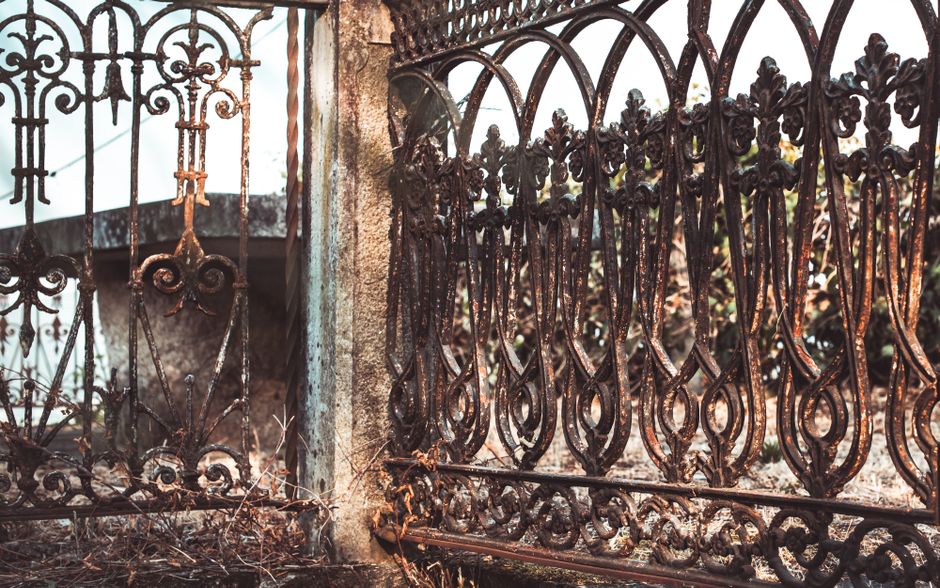
Detailed image of a weathered iron fence in Galicia, showcasing vintage art elements.

How Do Columns and Fence Runs Tie Into a Large Gate Entrance?

2026-11-09

Columns and fence runs tie into a large gate entrance through a steel structure that carries the load, with stone or stucco added as a covering and fence panels set to match the gate's height and style. The look of the entrance depends on the covering, but the strength depends on what is hidden inside and below it.

What a Column Does at an Entrance

Elegant wrought iron gate with gold accents in Regent's Park, London, under a clear blue sky.

A column at a gate entrance frames the opening, gives the entrance presence, and in many designs holds the hinges. Those jobs are different, and a column that does the first without being built for the second becomes a problem.

A purely decorative column can be a hollow shell of block or a veneer over wood framing. A structural column has a steel post inside, set in a deep footing, with masonry built around it. The two can look identical from the road, which is why it is worth asking what is inside.

The Steel Post Inside

Decorative iron gate featuring the year 1904, showcasing vintage design in London.

A heavy leaf pulls hard on its hinge post, and the post resists by staying rigid in the ground. Steel tubing of a thick wall is the usual choice, with a base plate or a long embedded section set in concrete.

The post is sized by the weight and width of the leaf. A wide double leaf gate with tall pickets needs a bigger post than a short single leaf, because the leverage grows with the width.

The masonry is then built around the steel. The steel carries the gate, and the stone or stucco is a finish that shares none of the load. That separation matters, because masonry can crack if it is asked to resist the twist of a swinging leaf.

Footings Made for Shifting Ground

Ground in Williamson County varies from thin limestone soil over rock to deep clay. A footing must be designed for the ground at that exact spot, since a plan that suits rock may fail in clay.

Clay swells with rain and shrinks in drought. A footing that is too shallow rides those movements, and the column leans a little each year until the gate no longer latches.

  • Footings go deeper than the movement zone of the soil.
  • Footings are wider at the base in clay to resist tipping.
  • The top of the footing sits above grade and sheds water.
  • Each column gets its own footing, separate from the fence run.

Where drilling hits rock, the post can sometimes be pinned into the rock itself. A crew that finds rock should explain what it did differently, and not simply hope for the best.

Covering the Column

Stone, brick, and stucco are the common coverings. Natural limestone suits the Texas Hill Country and blends with local rock, while stucco is smoother and can be tinted to match a house.

Each covering has its own care. Stucco can crack if the ground moves, and the cracks let water in. Stone and brick are more forgiving, but their mortar joints still need to be sealed against moisture.

A cap on top of the column keeps rain out of the core. Without a cap, water seeps into the center and attacks the steel from the inside, where nobody can see it.

Matching Fence Runs

A fence that continues from the gate should look like it belongs to the same entrance. The height, picket spacing, color, and top detail should echo the gate, even if the fence is simpler.

The fence is usually built in sections between posts, and those posts carry no swinging load, so they can be lighter. They still need footings that suit the soil, since a leaning fence line next to a straight gate looks sloppy.

On slopes, fence panels are either stepped or racked. Stepped panels stay level and drop at each post, while racked panels follow the ground in a smooth line. Stepped is neater on steep ground, and racked looks continuous on gentle slopes. Which one suits depends on the lot.

Where the Gate and the Fence Meet

The joint between the gate post and the first fence section is a common weak spot. Water collects there, the finish wears, and movement in one part stresses the other.

A clean joint keeps the gate post independent of the fence. A small gap or flexible connection lets each part move on its own, so shifting ground does not twist the whole entrance.

Ground Slope and Drainage

Hill country lots rarely sit flat, and the slope affects where water goes. Water should flow away from column bases and fence footings, and not collect against them.

A small amount of grading, a gravel strip, or a drain line can protect a column for years. Standing water at the base of a column rots wood, rusts steel, and softens soil, and all three shorten the life of the entrance.

Wind on Open Lots

Open land funnels wind, and a solid fence panel catches it like a sail. Posts and footings for solid sections must be sized for that load, and a fence run next to a gate should not be the weaker part.

Open picket fences let wind through and put less strain on the posts. Many owners pick open pickets for the long runs and a more solid look near the gate, where privacy and presence matter most.

Lighting, Mailbox, and Wiring in the Columns

Columns are a natural home for lights, a mailbox, a keypad, or an address plaque. Each one needs a route for wiring, and that route must be planned before the masonry goes up.

Conduit is set inside or alongside the column during construction. Adding a hole later means cutting finished stone or stucco, and it rarely looks right afterward.

  • Run conduit for lights and controls before building the covering.
  • Leave an access point for servicing the wiring.
  • Seal around fixtures so water does not enter the column.
  • Keep the mailbox on a separate footing from the gate post if possible.

Finish and Color Choices

Metal finish and masonry color should work together. Black and dark bronze are common for gates, and they look good against light stone, but dark metal gets very hot in a long summer and can wear its coating faster.

A slightly lighter metal color stays cooler and can look just as rich. A sample against the actual stone, seen in morning and afternoon light, is a smart step before a final choice.

Order of Work

The order of construction matters because each step depends on the one before it. Footings come first and must cure. Steel posts follow and are braced plumb. Conduit is laid, masonry is built, caps are set, and only then is the gate hung.

Hanging a gate on a column before the masonry has cured, or before the footing is solid, invites movement. Patience at this stage saves repair later.

Checking the Result

A finished entrance can be checked in a few minutes. Look at the posts for plumb, check that both leaves swing without rubbing, and confirm that the gaps are even from top to bottom.

Look at the joints between metal and masonry for gaps or cracks. Watch how water runs off after a rain, and check the cap for drips that stain the face. These small checks reveal the quality of the work better than any sales description.

Keeping It Straight Over Time

An entrance of this size keeps looking good with light, regular care. Rinse dust from the finish, touch up chips on the metal, reseal masonry as needed, and keep the base of each column clear of soil and mulch.

After heavy storms or a hard freeze, walk the entrance and look for new cracks, leaning posts, or loose caps. Catching a small shift early is far easier than correcting a column that has leaned for years.
Read more →

A sunlit garden gate surrounded by lush greenery, creating a serene and inviting entrance.

What Should a Long Driveway Gate System Include Besides the Gate?

2026-11-09

A gate at the end of a long driveway should include a reliable way to call the house, a way to let invited people in, protected power, lighting, and a spot for the mail. The gate itself is only the visible part, and the supporting pieces decide whether the entrance is pleasant to use every day or a constant nuisance.

Why the Extras Matter More on a Long Drive

Ornate metal gate with nature motifs in a lush park with vibrant flowers.

A long driveway puts distance between the gate and the house, and that distance changes every decision. A visitor cannot be seen from a window, a voice cannot carry, and a wire that would be a short hop on a suburban lot becomes a long, buried run.

On acreage near Leander or out toward the hills west of Brushy Creek Lake Park, the gate may sit a long way from the front door. That is why the supporting pieces are planned together with the gate and not added one by one afterward.

The Intercom

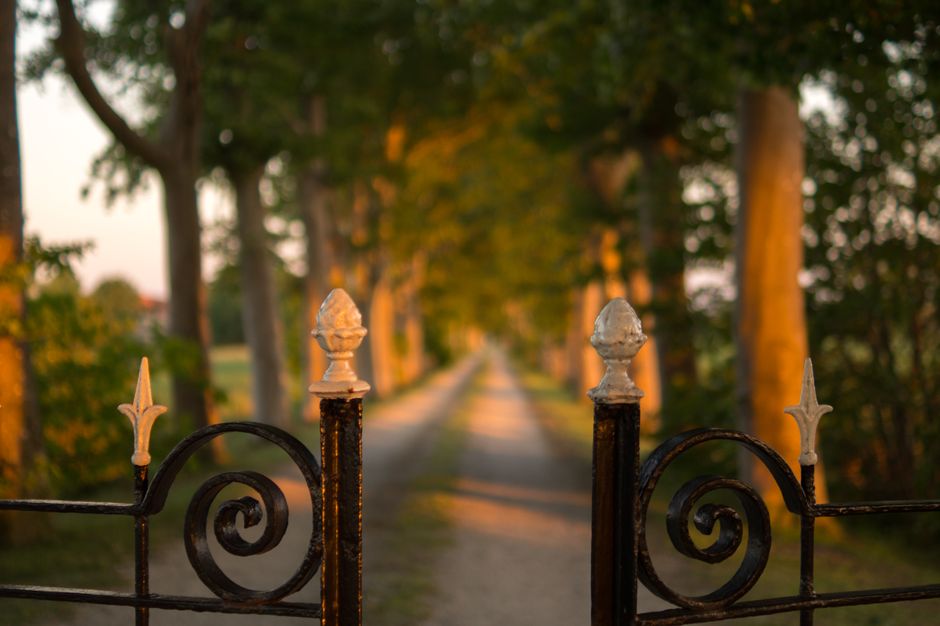
A tranquil unpaved pathway lined with trees, seen through an ornamental wrought iron gate at sunset.

An intercom is the first piece most owners want, and the first one that causes trouble when it is chosen carelessly. It lets a visitor speak to someone at the house, and the person inside can then open the gate without walking to the entrance.

Several things decide whether it works well on a big property:

  • Distance from the gate to the receiving station, which affects the type of wiring or wireless link.
  • Whether the station sits in a kitchen, an office, or a phone, since a station nobody hears is useless.
  • How well the speaker and microphone handle wind and outdoor noise.
  • Whether the unit is rated for long, hot summers and the occasional hard freeze.

A wired intercom is generally steadier over long distances, while a wireless link is simpler to install but can drop out when trees, hills, or weather get in the way. Ask the installer which one suits the terrain.

Keypads, Remotes, and Other Ways In

An intercom handles visitors, but the household needs quicker ways through. Common choices include keypads, key fobs, vehicle remotes, and phone-based controls.

A keypad needs to sit where a driver can reach it from a car window, which usually means a pedestal at the right height and distance from the gate. Placed too close, it forces the vehicle to stop in the gate's swing path. Placed too far, it forces a stretch that drivers find awkward.

Remotes are convenient but easy to lose, so it helps to keep the control board able to forget a lost remote. A system that cannot remove a single lost remote leaves the whole entrance dependent on it.

Power for the Gate and Its Accessories

Everything at the entrance runs on power, and a long drive makes that the most expensive and most important decision. There are two main paths: a buried line from the house, or a solar setup at the gate.

A buried line gives steady power but needs a trench, conduit sized for the wire, and care in crossing areas with irrigation or other lines. The trench should be marked and checked before digging starts.

Solar works well on sunny open ground, and Texas Hill Country lots usually get plenty of sun. It still needs a panel facing the right direction with no shade, a battery sized for several cloudy days, and a plan for hot weather, since batteries wear faster when they bake.

Either way, a backup battery keeps the gate working through a power outage. Without it, a storm that knocks out power also leaves the gate stuck.

Lighting at the Entrance

Lighting makes an entrance safer and easier to use after dark. It also shows off the gate, columns, and landscaping when guests arrive in the evening.

Good entrance lighting is placed to light the keypad and the gate path without shining into a driver's eyes. Low voltage fixtures on the columns or along the fence line are easier to hide and cheaper to run than large floodlights.

  • Light the keypad or intercom so a visitor can read it at night.
  • Aim fixtures down so they do not glare into approaching cars.
  • Use fixtures rated for heat and moisture, and place the wiring in conduit.
  • Add a photocell or timer so the lights run without anyone remembering them.

Lighting also draws on the same power run as the gate, so it should be counted when the wire and the battery are sized.

The Mailbox

A mailbox at a gated entrance raises a practical question, which is whether the carrier can reach it from the road without entering. The box usually sits outside the gate on its own post or built into a column, so mail arrives even when the gate is closed.

A mailbox built into a masonry column should be sized for the largest packages and have a way for the owner to reach it from inside the gate if desired. Matching the box to the style of the columns keeps the entrance looking planned and not improvised.

The mailbox post should have its own footing and should not lean on the gate post. Movement in one should not pull the other out of line.

Safety Devices That Belong in Every System

An automatic gate is a heavy moving object, and safety devices are not optional. The basic set includes sensors that detect a person or vehicle in the path and edges that stop the leaf on contact.

Photo eyes are placed so they cover the path of the gate in both directions. Contact edges sit along the leading edge of the leaf and stop and reverse it when pressed. A manual release lets someone move the gate by hand if power fails.

Every person in the household should know where the manual release is and how to use it. A gate that cannot be opened by hand in an emergency is a problem waiting for a bad day.

How the Pieces Fit Together

The control board is the center of the system. It receives signals from the keypad, remotes, intercom, and sensors, and it tells the operator what to do.

A good installer chooses a board with enough inputs for everything planned and a little room to grow. Adding a second keypad or a camera later is simple when the board already has a free input, and expensive when it does not.

It also helps to keep a simple wiring diagram. Years from now, whoever services the gate will be glad to know which wire runs where, and a photo of the finished panel with labels takes a minute to make.

Weather and Wear

Hot summers wear electronics, and a gate controller baking in a metal box on a sunny post can fail early. A shaded, ventilated enclosure helps, and so does mounting the board where it is not in direct afternoon sun.

Moisture is the other enemy. Condensation forms in boxes when hot days follow cold nights, and wiring connections should be sealed against it. Hail and wind rarely harm electronics directly, but they can knock a poorly mounted keypad or camera out of alignment.

Planning the Whole Entrance Once

The easiest way to get a good system is to plan everything on one drawing before work starts. Mark the gate, columns, keypad, intercom, mailbox, lights, and the wire route, and check that each piece has power and a path for its wiring.

That drawing lets the builder size the posts, place the conduit, and schedule the trench in one pass. Adding a missing conduit after the concrete has set means cutting finished work or running wire above ground, and neither looks good.

It also exposes conflicts early. A keypad that would sit in the swing path, a light that would shine into the intercom camera, or a mailbox that blocks a column footing is easy to move on paper and hard to move on site.

Maintenance Over the Years

A gate system needs regular attention. Test the safety sensors, clean the photo eye lenses, check the battery, lubricate the hinges, and listen for changes in the operator's sound.

Batteries in particular are a routine replacement item, and a gate that begins to move slowly in the morning is often telling its owner the battery is weak. Replacing it before it fails prevents a stuck gate.

Keep the manual release instructions where everyone can find them, and review them once a year. A small amount of care keeps a long driveway entrance working for decades.

Read more →

Nearby Service Areas

We also cover iron gates austin, tx in Austin, TX.